
Digital sovereignty
starts with resilient
software architecture
Digital sovereignty means preserving your company’s ability to act – even when political, legal, or economic conditions change. You can achieve it by making deliberate decisions about the dependencies you take on and the alternatives available to you. The key lever is your software architecture.
Key Takeaways
View Executive Summary

Every digital dependency is a choice. The only question is whether you made it consciously.

Who is this for?
Digital sovereignty affects multiple levels of your organization. Depending on who owns which decisions, the levers are different.
Strategic decision-makers
CTO, CIO, executive management:
You oversee IT strategy, vendor relationships, and compliance, with the goal of keeping the business resilient as conditions change. Digital sovereignty reduces risk, strengthens your negotiating position, and provides a solid foundation for regulatory compliance.
Architecture
Leaders
Enterprise architects, architecture teams:
You shape your company’s architecture strategy and, with it, a key lever for digital sovereignty. Your focus ranges from multi-cloud strategies and integration patterns to data sovereignty. You need to ensure that architectural decisions stay scalable, maintainable, and aligned with your business goals.
Delivery
Head of IT, engineering:
You are responsible for team enablement, operations, and day-to-day execution. Digital sovereignty matters to you because it cannot be achieved without in-house expertise. Your focus is on practical implementation, capability building, and driving incremental change without disruption.
Do you know your dependencies?
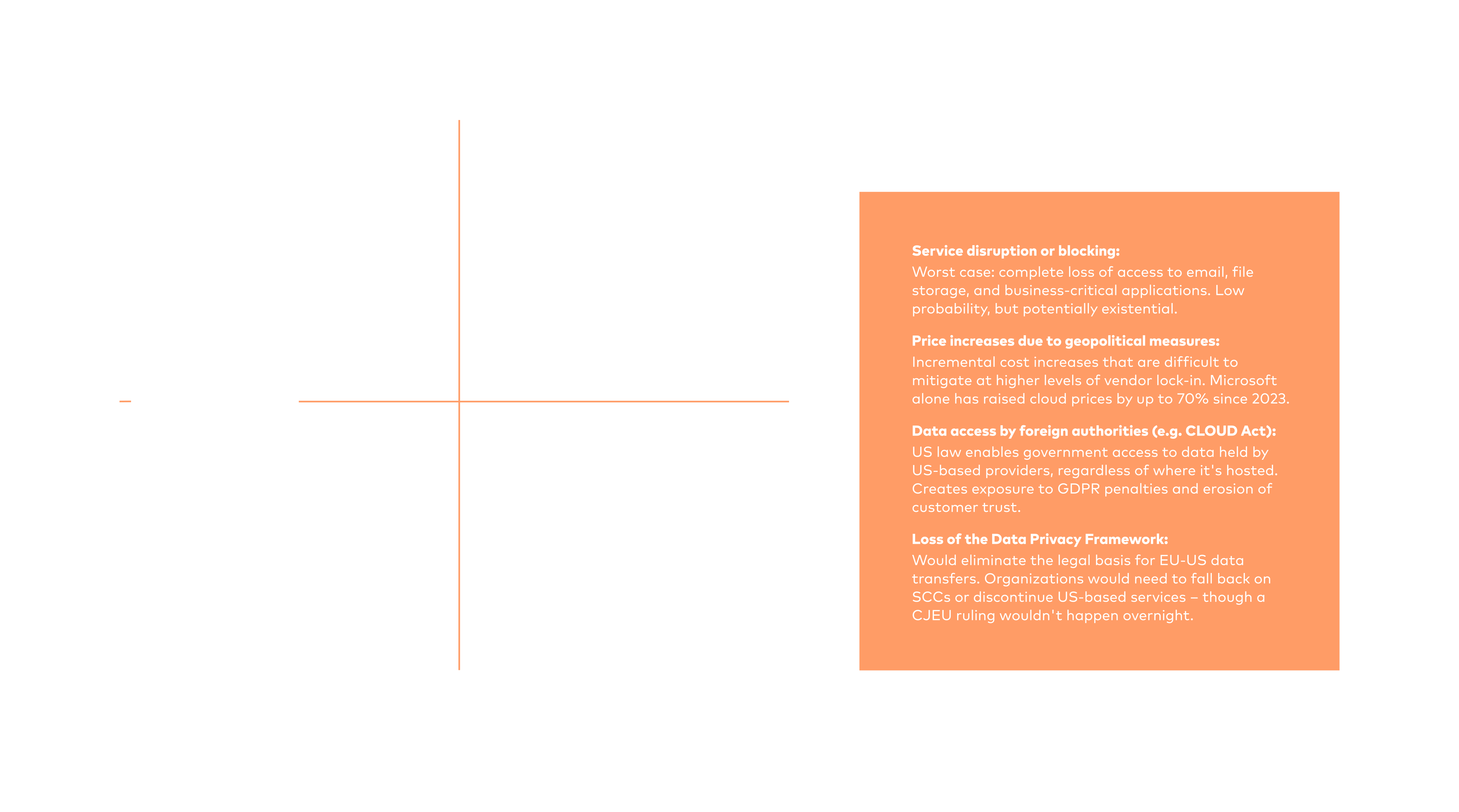
Over the past few years, European companies have outsourced large parts of their IT landscape to US cloud providers. The advantages were compelling: scalability, speed, innovation. But those decisions also created dependencies that are now turning into risks.
Where to take action
Digital sovereignty does not come from a single measure. The seven areas below show where architecture decisions make a concrete difference.

Sovereignty starts with the structure of your systems. If you want to manage dependencies, you need a software architecture in which individual parts can change or be replaced independently.
Without visibility, there is no control. Before you can reduce dependencies, you need to make them visible – both technically and from a business perspective.
Digital sovereignty means making conscious decisions about where standard solutions are sufficient and where custom development is necessary – and choosing providers in ways that keep switching feasible.
You cannot avoid dependencies, but you can isolate them. The goal is not autarky. It is freedom of choice.
AI is making its way into more and more business processes. Anyone using it should understand the dependencies involved.
The best architecture decisions are worth little if you do not have the people to implement and evolve them.
Regulatory requirements for IT systems are increasing. At the same time, organizations need to stay operational when disruptions occur. Software architecture is a critical lever in making that possible.
Read articles
Digital sovereignty is achievable. In these articles, our colleagues explain how to make it happen across different areas.












Digital sovereignty is achievable - we show you how!
We support you on your path to digital sovereignty, wherever you are today.
Sovereignty Check
What we do:

Effort: 3-5 person-days
Target State and Action Plan
Based on the initial assessment, we work with you to define a robust target state that is methodologically sound and grounded in your reality.
What we do:

Effort: 2-4 weeks
Implementation Support
We help you implement the identified alternatives step by step, both technically and organizationally.
What we do:
Effort: Varies depending on the scope of the measures
Why INNOQ?
Our consultants have spent more than 25 years advising SMBs and enterprises and delivering IT systems of every size.
Our expertise is grounded in extensive hands-on experience across software architecture and development, platform operations and infrastructure, and digital product development.
We do not see technology as an end in itself, but as an enabler for solving real business problems.
What we offer:
Each stage can be booked separately. Scope and effort depend on the complexity of your IT landscape. Get in touch — we will help you find the right starting point.


Facts & Figures
Clients who trust us







Frequently Asked Questions
What our clients say about us
Software architecture only works when people can understand it and keep evolving it. In our projects, we combine technical expertise with enablement – and show how good architecture can drive sustainable change. Many of our clients have already seen the benefits.
Get in touchINNOQ played a very big part in us taking on this project in the first place. We have completely turned the IT system of our company inside out. We wouldn't have entertained this idea without a partner whose expertise gave us the necessary confidence to take this risk.
Head of IT, Fleurop AG
INNOQ supports us not only in technical implementation but also in the strategic digitalization of our business model.
Head of Engineering, SACAC
With support from INNOQ’s architecture assessment, we successfully laid the foundation for our future macro architecture.
Software Architect, Verband der Vereine Creditreform e.V.

Get in touch
We support you on your path to digital sovereignty, wherever you are today.